
Reading Room · 6 min read
Why Adventure Stories Matter for Kids Ages 3–8
Adventure stories grow vocabulary, empathy and courage in ages 3 to 8, and repetition makes it all stick. Here is why, plus five ways to read them well.
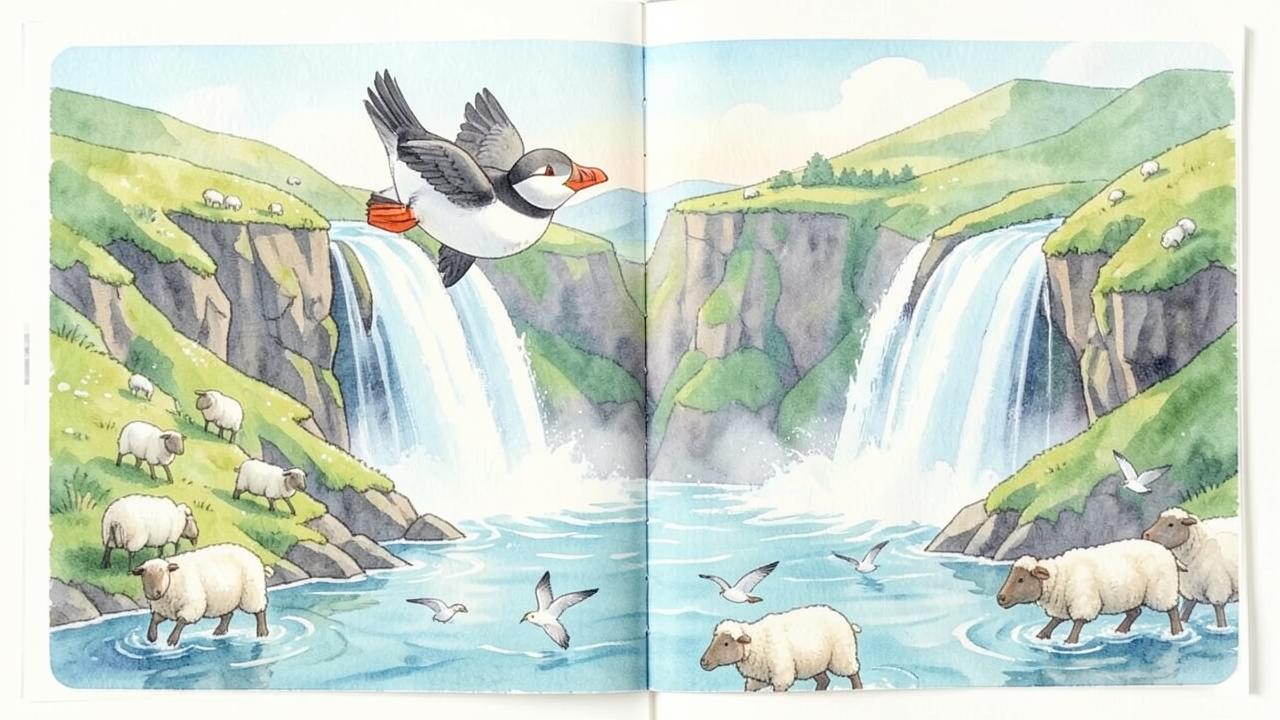
Every child already knows how to be brave in a story. Long before they can read a word, they can follow a small creature out of a safe place, into a strange one, and back home again. That shape of leaving, discovering and returning is the oldest teaching tool we have, and it is why adventure stories earn their place on the bedtime shelf.
1. Adventure grows vocabulary fast
Picture books contain far more rare words than everyday conversation, and adventure books more than most: cliff, glacier, current, volcano, tide. Children ages 3 to 8 absorb these words in context, attached to a picture and a feeling, which is exactly the condition under which vocabulary sticks. A child who has met a puffin on a page recognises the word years later in a classroom.
2. Repetition turns language into memory
A repeated pattern gives young readers a scaffold. When a story comes back to a familiar line, a pre-reader can complete it out loud, which is their very first act of reading. Hearing the same words in the same order, night after night, is one of the strongest ways language sticks. It is also why children ask for the same book eleven nights in a row.
3. New places build empathy
A story set on a Galápagos beach or an Icelandic cliff quietly teaches a child that the world is larger than their street, and that the creatures and people in it have their own ways of living. Research on narrative and social cognition keeps finding the same thing: children who read about other lives get better at imagining them.
4. Small risks, safely rehearsed
In an adventure, someone is nervous and goes anyway. Reading that pattern again and again gives children a rehearsal for their own first days: a new school, a swimming lesson, a sleepover. The story does not have to be about school for the courage to transfer.
5. It makes reading a shared pleasure
The single strongest thing you can do for a young reader is make reading feel like somebody's lap and somebody's voice. Adventure books help because adults enjoy them too; a grown-up who is not bored reads with more life, and the child hears that.
How to read an adventure story well
- Read at an even pace, and let the story carry, don't over-explain mid-line.
- Pause before the last word of a line and let your child fill it in.
- Point at one detail per spread and ask what it might be.
- Find the real place on a map or globe afterwards.
- Say yes to the eleventh reading. Repetition is the learning.
Start with two islands
An Iguana Named Lana and Huffin the Puffin are read-aloud adventures written for ages 3 to 8, together in the Adventure Bundle at a saving.
See the bundle