


Reading Room · 5 min read
Picture Book Checklist: 5 Signs a Book Will Be Read Again
Updated
Our picture book checklist favors natural sentences, words you can discuss and illustrations with details to explore. These are selection suggestions, not a formula for learning or a guarantee that a book will be reread. A familiar book can still be worth enjoying even when its words are already known.
What vocabulary level suits a 4 year old?
Look for language your 4 year old enjoys, with some unfamiliar words you can explain through pictures and conversation. Picture books can offer more varied vocabulary than everyday talk. Research does not prescribe a number of new words per spread, and familiar books can still support discussion and enjoyment.
A picture can help you discuss an unfamiliar word. Ask what your child notices and explain the meaning in everyday language. Choose a manageable story rather than counting new words on every spread or dismissing a familiar favorite.
Sources: Montag, Jones & Smith: The Words Children Hear: Picture Books and the Statistics for Language Learning; Reading Rockets: Dialogic Reading: An Effective Way to Read Aloud with Young Children
What kind of story can a 4 year old follow?
A clear journey can be a useful starting point when choosing a book for your 4 year old. Ask what happened and what might happen next, then follow their response. This is a selection suggestion, not a rule that every child this age needs the same plot or cannot follow a subplot.
Leave, discover, return is one story shape to try. Invite your child to describe a favorite moment. Their interest and responses are more useful than assuming that every four year old follows the same kind of story.
What should the pictures in a book for a 4 year old include?
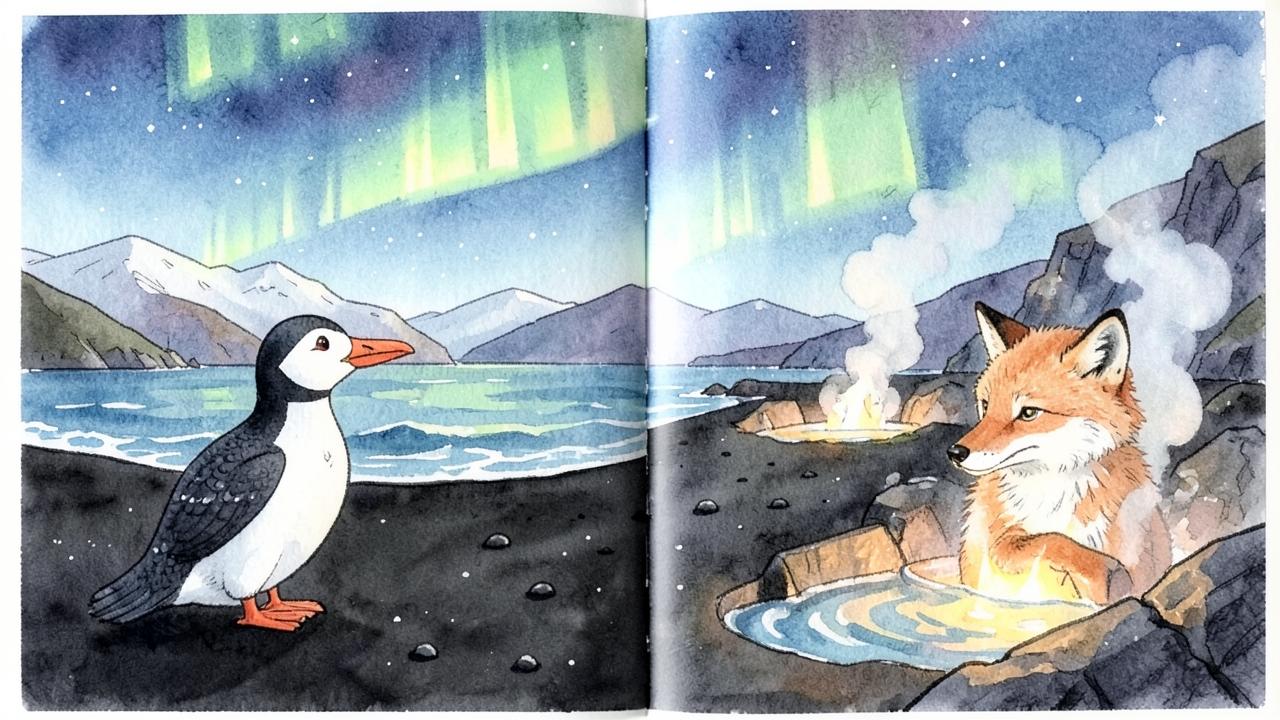
The best pictures for a 4 year old include small background details to discover, such as a crab in the rocks or a bird on a ledge. Those details give your child something new to spot and ask about each time. That is what turns one reading of a picture book into ten.
The best spreads carry a second story in the background: a crab in the rocks, a bird on a ledge. That detail is what turns one reading into ten, because there is always a new question to ask.
Language that reads naturally
A repeated phrase offers a place for your child to join in. Completion prompts can give practice with sentence structure, one part of language learning rather than the whole foundation of reading. Read a page aloud before you commit.
Source: Reading Rockets: Dialogic Reading: An Effective Way to Read Aloud with Young Children
Choose the format for the use
A hardcover suits nightly reading and travels between houses. A digital eBook is useful for holidays. Both AdventureRhyme titles are available in hardcover and eBook editions, so choose the edition that suits your reading routine.
Signs of a book that lasts
- You do not mind reading it again
- Your child can retell it from the pictures
- There are questions to ask on every spread
- The ending lands somewhere calm
Built for four year olds
Both AdventureRhyme titles are read-aloud picture books for ages 3 to 8, with a real place behind every spread. The Adventure Bundle pairs them at a saving.
See the bundle